Les élus ont validé le budget de Saint-Valéry-sur-Somme lors du dernier conseil municipal. Nouveauté de 2024 : la mise en place d’un budget participatif.
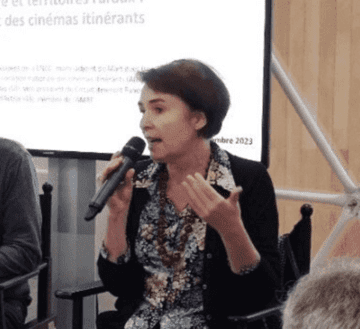
Anne Lidove ©Bertrand Schmit/CinEssonne
 3OP
3OPLes élus ont validé le budget de Saint-Valéry-sur-Somme lors du dernier conseil municipal. Nouveauté de 2024 : la mise en place d’un budget participatif.
La coordinatrice du projet Isabelle Doumit Skaff a lancé l’opération. Avec le soutien de la Direction générale des antiquités (DGA), l’experte en restauration et conservation des œuvres d’art, …
Le maire, Régis Cartayrade, annonce le passage d’experts d’assurances dès ce jeudi 11 avril. Soit à peine deux jours après le sinistre survenu dans la nuit du lundi 7 au mardi 8 avril.
La foudre, tombée sur le clocher de l’église du petit village de Veyreau dans la nuit du lundi 7 au mardi 8 avril, a laissé autant de cendres que de regrets. « Les trois cloches ont été sécurisées et une charpente provisoire a été mise en place par les pompiers ce mercredi » souffle le maire Régis Cartayrade. « Voici un an nous avions mené d’importants travaux, intérieurs comme extérieurs, sur cette église. L’opération avait été financée par le don d’une habitante du village, décédée, et qui avait laissé une bonne somme à la commune pour restaurer des lieux religieux. Nous avions ainsi refait les lustres, tout l’intérieur de l’église ainsi que les façades extérieures et les vitraux. »
Régis Cartayrade ajoute que la rénovation avait également concerné « ce fameux clocher qui, au départ, n’était pas à son emplacement actuel d’ailleurs. Il se trouvait à l’opposé de l’église avant d’être reconstruit du côté de la place du village. » Une église Saint-Jean Baptiste, patronne de la paroisse, qui voit encore régulièrement diverses célébrations passées. « Il y a des mariages notamment et, parfois, des mess. La mairie y organise parfois des concerts. »
L’incendie du clocher n’a pas, fort heureusement, abîmé l’intérieur de l’édifice religieux.« Il n’a pas souffert. »
A lire aussi :
« Tout le monde est choqué » : la foudre a frappé et détruit le clocher de l’église de Veyreau dans l’Aveyron
Reste que, passé la – grande – émotion face à ce sinistre aussi soudain que brutal, le maire de Veyreau se projette dans l’après . « Nous attendons les expertises des assurances. La première est prévue ce jeudi 11 avril. Nous verrons, ensuite, comment financer la restauration. Idéalement sans que la commune fasse d’emprunt. »
Régis Cartayrade sait que la reconstruction de la charpente du clocher supportant le poids de trois cloches ce ne sera pas une mince affaire. « N’importe qui ne peut pas assurer ce type de travail. Il faudra une entreprise spécialisée ou, peut-être, les Compagnons du Devoir… » Sans l’espoir d’une intervention, financière autant que divine, de l’évêché. « Nous leur demanderons mais, selon la loi, la commune est propriétaire et doit assurer l’entretien. »
L’émotion intense, abondamment relayée depuis mardi matin sur les réseaux sociaux, pourrait faire espérer à une potentielle cagnotte participative pour aider Veyreau à retrouver son clocher. « Nous verrons. Peut-être que les assurances couvriront l’intégralité du coût des travaux. » L’idée serait« de remettre à peu près à l’identique même s’il faudra sans doute changer les trois cloches, l’une de 210 kilos et les deux autres de 300 kilos et 780 kilos. Certaines, je pense sont fêlées car on a entendu un bruit quand les pompiers arrosaient le clocher.

Anne Lidove ©Bertrand Schmit/CinEssonne
Le cinéma itinérant, c’est aujourd’hui 109 exploitants passionnés (rapport d’information du Sénat, 24 mai 2023), épaulés par de nombreux bénévoles, en France et Outremer. Ceux-ci organisent des projections de films dans près de 2500 communes rurales, dans tous les coins du territoire national. C’est là une offre exceptionnelle mais largement méconnue, qui dispose, en outre, d’un fort potentiel de développement.
Pour Anne Lidove, présidente de l’Association nationale du cinéma itinérant (ANCI), ce dernier constitue une offre culturelle de proximité pleine d’avenir. Investir pour mettre en œuvre de nouveaux circuits et toucher plus de communes, c’est, à ses yeux, le défi qui se présente aujourd’hui.
Qu’on en juge : non seulement la demande dans les territoires ruraux ne faiblit pas, mais de plus l’arrivée de nombreux « rurbains » dans les campagnes apporte un surcroît de dynamisme à tous les niveaux : l’engagement (professionnel et bénévole) , le besoin d’équipements sur place, un mode de vie connecté en harmonie avec la transition écologique… L’exception culturelle habite aussi dans les campagnes ! Entretien.
Séance à la Martinique (Trois Ilets) ©Ciné Woulé Compagny
Comment se passe une séance de cinéma itinérant dans une commune rurale ?
En amont, c’est d’abord l’organisation d’une tournée. Chaque exploitant de cinéma itinérant définit avec ses partenaires un « circuit ». Le jour d’une séance, le projectionniste apporte tout son matériel cinéma en camion – l’équipement est en effet « tout numérique » – sur place, pour installer la séance et assurer la projection.
Parallèlement, le public a été informé par différents biais (notamment sur internet où sont maintenant publiées les séances, grâce au soutien du CNC, le Centre national de la cinématographie de l’image animée). S’il est en âge d’en profiter, il a utilisé son pass culture.
« Près des deux tiers des circuits sont classés art et essai »
Parfois, le cinéma n’est là qu’une fois par mois. C’est donc un événement. Tout est parfaitement organisé par les salariés et bénévoles. Souvent, la salle est comble et l’accueil est toujours chaleureux. Des séances du soir, suivies de ciné-débats très animés, et même quelquefois la présence du réalisateur (toujours très heureux de rencontrer ce public). Signalons que près des deux niveaux des circuits sont classés art et essai. Et autour de la séance, en partenariat avec la commune, les jeunes profitent des dispositifs d’éducation aux images que nous relayons pour eux.
C’est vraiment du baume au cœur, pour tous ces passionnés, professionnels et bénévoles, et pour les édiles, de voir que l’énorme travail qu’ils accomplissent est tellement apprécié de ce public. La demande est forte et ne faiblit pas !
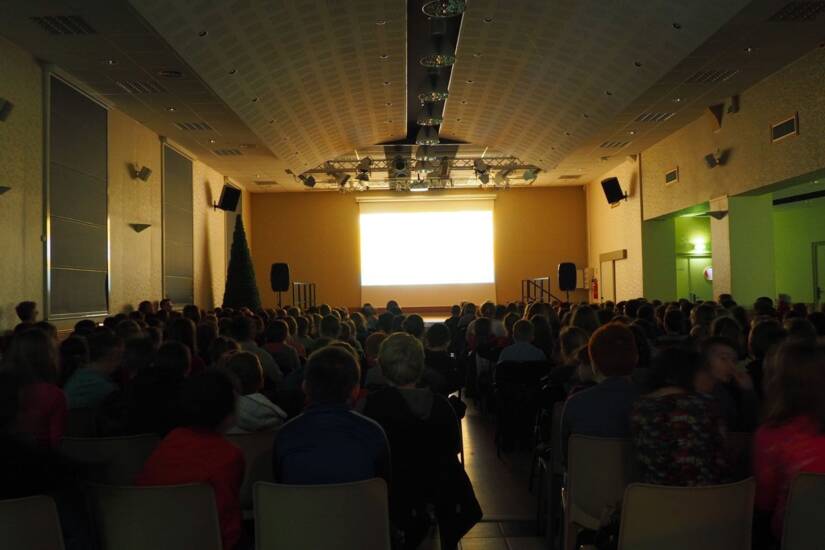
Séance dans les Hauts de France ©CinéLigue HDF
Comment décririez-vous ce public du cinéma itinérant ?
Il vit, bien sûr, en pleine campagne. C’est un public local qui, avec raison, ne veut pas d’une programmation à rabais. Depuis quelques années, les « rurbains » constituent une part de ce public. Il s’agit de personnes plus jeunes, des familles avec des enfants qui ont quitté les villes récemment. Ils ont été des habitués à profiter d’une offre culturelle de qualité. Souvent, ce sont les éléments moteurs d’une création d’activité. Ils contribuent à enrichir les propositions du cinéma itinérant, dans des communes du bout du bout du territoire, où l’offre culturelle est rare, sinon parfois un tout petit coin médiathèque… !
Dans ces conditions, le cinéma itinérant est-il une offre culturelle d’avenir ?
Je crois beaucoup à son avenir, parce qu’avec un soutien financier il pourra non seulement renforcer ses équipes, mais aussi développer de nouveaux circuits. Je crois aussi à son avenir parce qu’il est parfaitement vertueux en termes de transition écologique : nous évitons aux gens d’avoir à faire des kilomètres pour se rendre en ville au cinéma. Et enfin je crois à son avenir parce qu’il est un vecteur idéal, simple et bon marché, de la progression de l’offre culturelle dans les territoires les plus reculés.
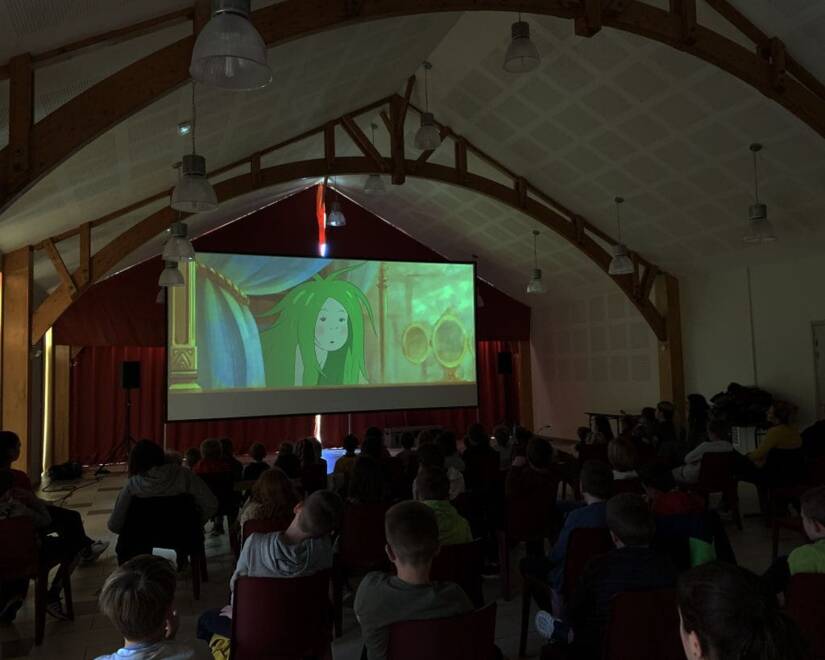
Séance jeune public dans les Hauts de France ©CinéLigue HDF
Pour permettre ce développement presque naturel, vue la demande du public rural, il faudra simplement aider les communes à rénover leurs lieux d’accueil. Il faudra aussi, c’est très important, aider les exploitants à embaucher des personnes nouvelles, jeunes, dynamiques et reliées aux réseaux sociaux, pour renouveler les propositions, affiner la communication, nourrir la médiation, promouvoir l’éducation aux images.
Aujourd’hui, bénévoles et professionnels tiennent à bout de bras cet univers du cinéma itinérant, avec fort peu de moyens, et ils ont le sentiment d’être continuellement débordés par les demandes. Cet art, que tout le monde plébiscite et qui n’a qu’à se programmer pour faire salle comble, est fait pour l’itinérance. Et comme au temps des frères Lumière, il doit aller, en pionnier, porter aux avant-postes le meilleur de l’offre culturelle.

C’est encore une fois un document à forte valeur symbolique et émotionnelle qui est présenté par les Archives nationales. À partir du 8 mars et jusqu’au 2 septembre, le cycle « Les Remarquables » se penche sur le discours prononcé par Simone Veil en 1974 dans le cadre du vote de l’Assemblée nationale de la loi autorisant aux femmes le recours à l’ interruption volontaire de grossesse (IVG). Un document qui fait écho à l’actualité, à l’heure du vote pour l’inscription de ce droit dans la Constitution.
Ce cycle fait suite aux « Essentiels » qui revenait sur quelques-uns des textes fondateurs de la République, comme la déclaration des droits de l’homme et du citoyen de 1789, les décrets d’abolition de l’esclavage et de la peine de mort ou l’ordonnance de 1944 instituant le droit de vote pour les femmes. « Les Remarquables sont des documents mémorables et saisissants en raison de leur forme ou de leur contenu », explique Christophe Barret, chargé d’exposition au musée des Archives nationales. A noter : ce discours sur l’IVG a été choisi directement par le public comme nouveau thème d’exposition en septembre dernier.
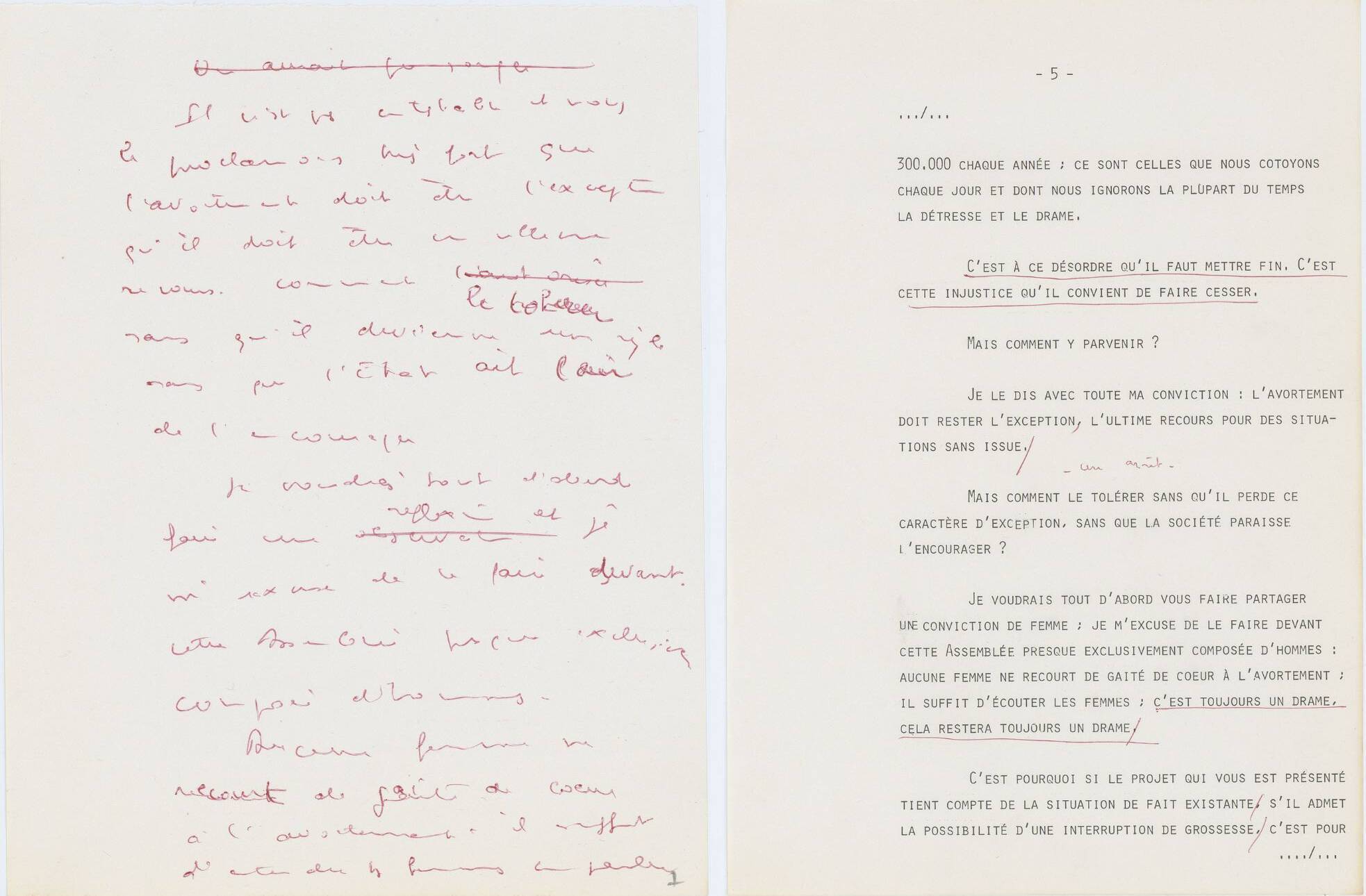
Archives nationales de France
Les Archives reviennent sur un moment particulier de notre histoire récente par le prisme de documents peu connus du grand public : le manuscrit et le tapuscrit du discours de Simone Veil. « Simone Veil pensait avoir égaré le manuscrit dans la fièvre du moment », poursuit Charlène Fanchon qui assure avec l’historienne Bibia Pavard le commissariat scientifique de l’exposition. Les deux documents ont été retrouvés dans les archives personnelles de l’ancienne députée, entrées aux Archives nationales à partir de 2012.
Ces deux documents essentiels sont au cœur de cette exposition. Ils sont présentés à travers trois feuillets – n°7 et n°8 pour le manuscrit, n°5 pour le tapuscrit – qui reprennent l’un des moments-clés du discours : « aucune femme ne recourt de gaieté de cœur à l’avortement ». On peut y suivre, à travers annotations et biffures, l’évolution de la stratégie politique de Simone Veil. Ainsi, la formule « je voudrais tout d’abord vous faire partager une réflexion » qui devient symboliquement « je voudrais tout d’abord vous faire partager une conviction de femme », devant une Assemblée composée presque exclusivement d’hommes (seulement 9 femmes siégeaient sur 490 députés). « On voit très bien qu’elle cherche vraiment le mot, la formule qui sera la plus forte », souligne Charlène Fanchon.
Le tapuscrit renseigne aussi sur la manière dont elle a travaillé son éloquence avec des scansions et des mentions manuscrites pour indiquer des temps de pause. Une vidéo permet de parcourir, avec l’historienne Bibia Pavard, l’ensemble du document. « Sur la première page, on voit la trace d’une brûlure de cigarette et on imagine tout à fait Simone Veil en train de relire le discours une énième fois, la cigarette à la main, et de l’annoter. Le document montre également une autre écriture qui, selon toute vraisemblance, est celle de son directeur de cabinet Dominique Le Vert, qui intervient pour déplacer des phrases à des endroits où elles seront plus percutantes », constate Charlène Fanchon.
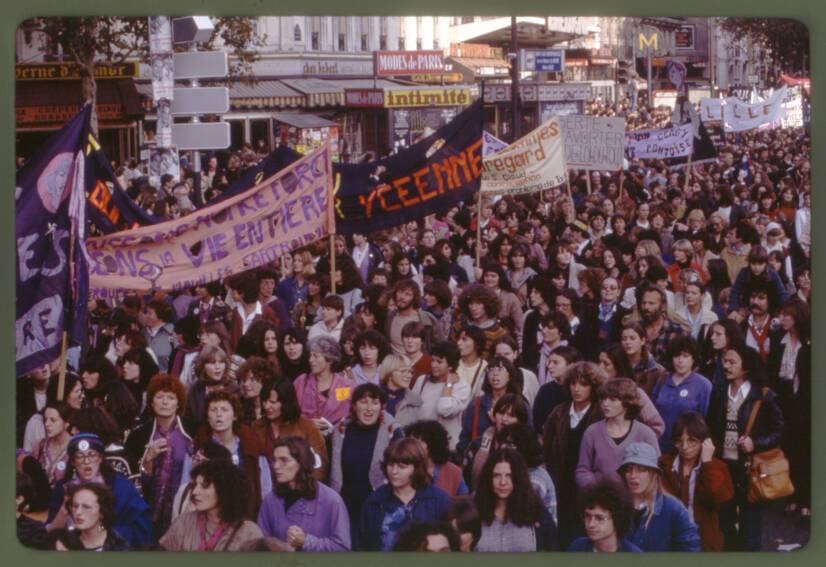
Michel Calvès. Avec l’aimable autorisation des éditions Amsterdam et de Kévin Bideaux
Autour du discours et au-delà de la figure tutélaire de Simone Veil, symbole malgré elle de ce combat pour le droit à l’avortement, d’autres documents viennent recontextualiser et remettre en lumière le combat des femmes à l’époque. Une première partie revient sur les procès de Bobigny de 1972, avec les archives de l’avocate Gisèle Halimi qui sont également conservées aux Archives nationales, et plus particulièrement le procès de Michèle Chevalier, mère de Marie-Claire, 16 ans, jugée le mois précédent pour avoir avorté après un viol. « L’idée est de montrer l’énorme rétention qu’a eu ce procès qui, finalement, va ouvrir la voie à la dépénalisation de l’avortement en France », selon Charlène Fanchon. L’exposition donne à voir une lettre de soutien à Marie-Claire Chevalier envoyée à Gisèle Halimi, témoignage d’une jeune femme sur son propre avortement clandestin.
La partie la plus impressionnante est celle de la plaidoirie de Gisèle Halimi, présentée sous la forme de 57 pochettes. « Elle décide de faire un procès politique de l’avortement et de dénoncer le caractère à la fois répressif, discriminatoire et injuste de la loi de 1920. Elle s’appuie sur des personnalités qui ont une légitimité scientifique comme le professeur Milliez ou le prix Nobel de médecine Jacques Monod, ou très connu du grand public comme Simone de Beauvoir. » La déposition de cette dernière, simple et percutante, est également à consulter.
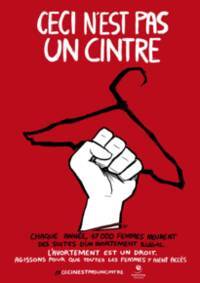
Centre de documentation du Plan Familial, Paris
La dernière partie revient sur l’après vote à travers divers documents : le texte de loi de 1975, photographies et documents témoins de la mobilisation de 1979 pour la promulgation définitive de la loi de 1975, bilan d’application de la loi datant de 1985 et enfin liste des actions des commandos anti-IVG répertoriées entre 1990 et 1993 pour symboliser les résistances face au droit à l’avortement. L’exposition n’élude rien : ni le caractère très virulent de certaines interventions de députés pendant les vingt-cinq heures de débat, ni les marques de solidarité et de soutien dont a constamment Simone Veil après son discours. Trois boîtes d’archives personnelles regroupaient des lettres venant des deux camps, allant des félicitations aux insultes à caractère antisémite. Elles sont présentées dans un court documentaire.
Cette exposition au format restreint, qui combine archives publiques et privées, illustre la richesse des fonds des Archives nationales. « Ce cycle qui présente sobrement des documents a pour ambition de permettre aux visiteurs de plonger au cœur de l’histoire », résume Christophe Barret. La Loi Veil succède en effet au rouleau d’interrogatoire des Templiers datant de 1307 et précède le contrat de construction de la Tour Eiffel, présenté à la fin de l’année.

Lorsqu’on entre chez Juget-Sinclair, rue Mill, à Montréal, on fait rapidement une rencontre hors norme : sur notre gauche, un grand orgue si imposant qu’il occupe les niveaux de l’atelier.
Après deux ans de travail, le facteur d’orgues Juget-Sinclair, une équipe d’artisans spécialisés dans la fabrication et l’entretien d’orgues mécaniques, s’affaire à démonter l’instrument pièce par pièce pour le livrer en Virginie, où il deviendra l’âme de la cathédrale du Sacré-Cœur de Richmond.
« Un orgue comme celui-ci qui sort du Québec, ça n’arrive presque jamais. »
L’Opus 55 est l’orgue le plus imposant à sortir de l’atelier de Juget-Sinclair. Pesant environ 15 tonnes, il est quatre fois plus gros qu’un orgue de chœur, qui sert lors des cérémonies religieuses.
Il sera utilisé pour les grandes cérémonies, les grands-messes, mais aussi les mariages, les grandes funérailles. Tous les moments importants de la vie des gens
détaille Robin Côté, lui-même organiste.
Installé à Montréal depuis 1994, Juget-Sinclair est le troisième facteur d’orgues en importance au Québec, derrière Casavant Frères et Létourneau, tous deux établis à Saint-Hyacinthe.
Le nouvel orgue, une véritable œuvre d’art empruntant le style néorenaissance de son lieu d’accueil, est le deuxième instrument d’une commande de trois que l’auguste cathédrale du Sacré-Cœur de Richmond a passé au facteur.
Le premier instrument, un orgue de chœur, a été livré l’an dernier. Le travail sur le troisième instrument, un petit orgue d’accompagnement aussi appelé orgue coffre, en est déjà au tiers de sa construction.
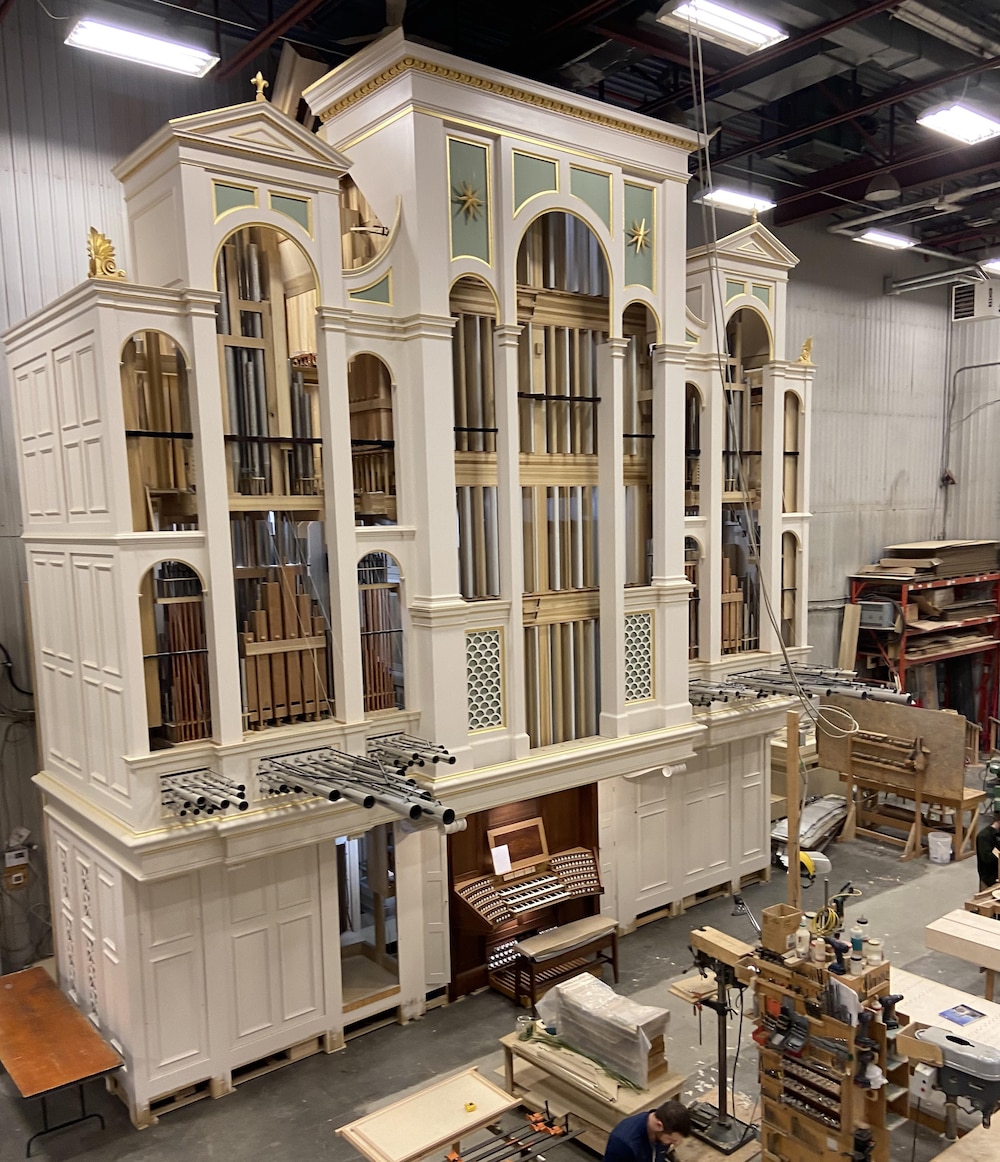
Recevoir une commande pour un orgue de tribune neuf comme l’Opus 55, accompagné de deux autres instruments, ça n’arrive pas tous les jours.
Cette commande est attribuable à une réputation bâtie depuis près de 30 ans, d’abord par le duo Denis Juget et Stephen Sinclair et ensuite par tous les gens qui sont passés par l’atelier
insiste Robin Côté.
Car un orgue n’est pas l’œuvre d’une seule personne, c’est l’œuvre d’une équipe où chacun a ses connaissances et se surpasse dans celles-ci
dit-il.
« L’orgue est une œuvre totale. […] On est comme des peintres, et les clients nous préfèrent selon nos tableaux précédents, sans avoir vu le nouveau. »
Celui-ci s’inclut dans l’équation. Il a intégré l’équipe du facteur il ya 22 ans et est passé par toutes les spécialités
de la conception à l’harmonisation, en passant par la tuyauterie et l’ébénisterie… jusqu’à devenir actionnaire et président de Juget-Sinclair.
Fabriquer un orgue ne s’apprend pas à l’école, du moins, pas en Amérique du Nord. C’est un savoir-faire qui se transmet de maître à apprenti
depuis l’Antiquité, souligne M. Côté.
Les frères Casavant, qui ont commencé au 19e siècle, ont appris avec Louis Mitchell, un Canadien français qui, lui, a appris avec Samuel Russell Warren, qui venait des États-Unis. Et lui, il a été informé d’un facteur en Angleterre
raconte Robin Côté. On a des connaissances qui se transmettent depuis des centaines d’années, et moi, je les transmets aux autres.
L’orgue est le seul instrument qui requiert des compétences en ébénisterie, en métallurgie, en mécanique, en ingénierie, en forgerie et en architecture, pour n’en nommer que quelques-unes. Savoir jouer n’est pas essentiel, mais ça aide énormément
souligne-t-il.
Le son des orgues Juget-Sinclair est bien montréalais
mais emprunte aux traditions allemande, française et nord-américaine.
Ça crée une sonorité unique, créée par nos oreilles, notre goût. C’est ce qui fait que les orgues de chaque compagnie ne sonnent pas de la même façon.
décrit M. Côté.
Écouter0 min 59 sec
Et une signature bien locale s’y trouve : les boutons de registre, aussi appelés jeux, qui permettent de sélectionner le son du hautbois, de la trompette ou de 65 autres instruments, sont identifiés en français.
Parce qu’on est des Montréalais, Québécois, et nous, on travaille en français. […] Personne ne s’en est plaint, même qu’ils aiment ça
lance-t-il.
Lorsqu’on appuie sur une touche, celle-ci actionne un levier qui fait déplacer un fil en fibre de carbone, attaché à des équerres, des balanciers et d’autres leviers. Ceux-ci ouvrent une soupape qui laisse entrer de l’air dans les tuyaux.
L’électricité n’est utilisée que pour actionner le ventilateur de l’orgue, et pas pour jouer. L’orgue n’a pas besoin d’électricité pour produire des sons. C’est le vent qui produit des fils
dit Robin Côté.
La maison des sœurs, située Grande Rue, est mise en vente. Ancien établissement religieux fondé en 1853, cette maison a accueilli les sœurs de la Charité puis les sœurs de la Marne. À partir de 1991, …
Le livre perdu Tudor Domesday
JamesHoare
mar, 20/02/2024 – 00:00
A lire:
Organisme à découvrir OCIM.,A lire ici.
Centre de conservation du Québec .,L’article de presse.
Petite histoire de la restauration des monuments historiques.,Article complet.. Suite sur le prochain article.
Leidrade a été évêque de Lyon : il a notamment créé deux écoles et restaurer de nombreux bâtiments religieux dans la région.
C’était jour de fête vendredi 2 février 2024 à Rugles. Le vitrail rénové de l’église Saint-Germain de Rugles a été béni et inauguré.